
November 1, 2026 | What We Cannot Keep
Revised Common Lectionary reflection for All Saints Day, Year A
November 1, 2026
By the Rev. Matthew D. O'Rear
Key verse: "Blessed are those who mourn, for they will be comforted.” – Matthew 5:4

All Saints Day has a way of making the church feel crowded. We speak names that have not been spoken aloud in a while. We remember voices, gestures, recipes, arguments, hymns, and laughter. Someone who has been gone for years can suddenly seem close enough to touch because a candle is lit or a familiar piece of music begins. The communion of saints is a theological claim, but on this day it can feel almost physical. The room is larger than the people we can see.
Perhaps that is why All Saints Day offers such a rich word about stewardship. It reminds us, gently and unmistakably, that almost everything most precious to us is something we cannot keep. Our lives. Our people. Our time. Even the communities we spend decades building will eventually belong to hands other than ours.
This is not particularly good news according to our culture that is often organized around possession. We are taught to acquire, secure, protect, and preserve. Yet, All Saints Day gathers us around a different truth. Life is a gift before it is a possession, and gifts are received differently when we know they cannot be held.
Revelation gives us that enormous multitude standing before the Lamb, people from every nation and language who have passed through suffering and now stand within God's promised future. Their hunger is over. Their thirst is over. The tears that once marked their faces are wiped away.
Notice that the vision does not deny what they have endured. Christian hope is not a polite way of pretending everything turned out fine. These people have known hunger and grief and tears. What Revelation dares to proclaim is that none of those things gets the final claim.
Then Jesus climbs a mountain in Matthew and begins naming as blessed precisely the people we might least expect. Those who mourn. Those who hunger for righteousness. The merciful. The peacemakers. Those whose faithfulness has cost them something. The Beatitudes do not describe people who have successfully arranged their lives to avoid loss. They describe people who have discovered life in the middle of vulnerability.
That seems important for stewardship. Perhaps stewardship is less about managing what belongs to us and more about learning how to faithfully receive what never belonged to us in the first place. The people we love are gifts. The years we are given are gifts. Our bodies, communities, resources, abilities, congregations, and even our faith are gifts entrusted to us for a season.
The saints teach us this simply by having lived. Most of them did not imagine themselves as saints. They were people who made dinner, paid bills, lost patience, showed up, gave what they could, buried people they loved, and tried again the next morning. Their holiness was often hidden inside ordinary faithfulness.
And now, somehow, what they gave remains. Kindness became part of someone else's courage. A gift to a congregation became a ministry they never lived to see. A welcome offered years ago became someone else's understanding of grace. A commitment to justice widened the world for people they would never meet.
This may be one of the mysteries of stewardship: very little of the good we do ends where we think it does.
All Saints Day therefore asks something more interesting than, “What will we leave behind?” It asks how we will inhabit what has been given to us while it is here. Can we love without pretending we can keep? Can we give without needing to see the final result? Can we tend communities whose future will belong to people we do not know? Can we spend our lives on mercy, justice, peacemaking, and love because Jesus calls such lives blessed, even when the world measures blessing differently?
Our names will one day join the list of those remembered on All Saints Day. Until then, we have this astonishing, temporary gift of being alive. Because right now, there are tears to wipe. Right now, there are hungry people to feed. Right now, there is mercy to practice. And right now, there is peace to make.
The saints have gone before us. Others will come after us. For this brief and beautiful stretch of the journey, these lives are in our hands. May we hold them with gratitude, and lightly enough to give them away.
In Worship
All Saints Day worship naturally gathers memory and thanksgiving, but it can also invite the assembly to consider the lives they have received from others.
As candles are lit or names are spoken, consider inviting worshipers to remember not only who those people were, but what continues because they lived. Perhaps someone taught them generosity, courage, prayer, hospitality, persistence, or the ability to laugh when life became difficult. The saints remain among us partly through the ways their love continues to take flesh in other people.
A simple visual gesture could deepen that remembrance. Bring out the parish registry and open it to the burial section, placing it near the table or another visible place in the worship space. The names recorded there are more than history. They are part of the story the congregation has received and now carries forward. Their lives, gifts, and witness helped shape the community gathered today.
The offering can be framed within that same communion. Much of what supports our lives now was given by people who never knew us. Our own giving participates in that same mystery. We offer resources for ministries whose ripe fruit we may never see.
That is not loss. It is trust.
All Saints Day reminds us that faithful giving has always reached beyond a single lifetime.
With Youth
Invite young people to think about something important they know how to do because another person taught them. Maybe someone taught them to cook, pray, play an instrument, stand up for another person, fix something, tell a good joke, or keep going when something is difficult.
Then ask: Where does that person's gift live now? The answer is surprisingly simple. It lives, at least partly, in them.
This offers a concrete way to talk about the communion of saints without making saints seem distant or unusually religious. Human beings leave traces in one another. Stewardship includes deciding what we will do with what has been placed in us.
What kindness will we keep moving? Whose courage might become stronger because of ours? What have we received that would become larger if we shared it?
All Saints Day reminds us that a life does not have to be famous to keep making a difference after it is gone.
With Children
Bring something that once belonged to someone important to you, perhaps a recipe card, a book, a tool, or another simple object.
Tell the children who it was that gave it to you and why you treasure it. Then explain that the most important things people give us are often things we cannot hold. Someone can teach us kindness. Someone can help us become brave. Someone can show us how to welcome people. Someone can remind us that God loves us.
Ask the children to think of someone who has taught them something good. Explain that on All Saints Day we remember people who have shown God's love in their lives. Some are living, and some have died, but the love they gave does not simply disappear.
Invite the children to place a hand over their heart and pray:
“God, thank you for everyone who has loved us. Help their love keep growing through us. Amen.”
Previously published reflections for All Saints Day, Year A:
2020 - And That is What We Are
2017- For All the Everyday Saints and Sinners
2014- A Day for Hope and Rejoicing?
2011- In the Company of Saints
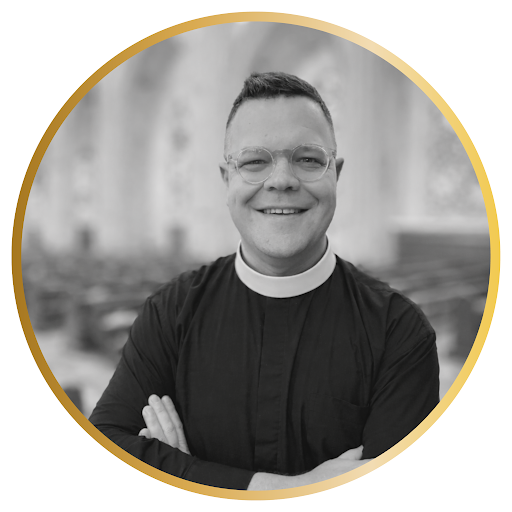
The Rev. Matthew D. O'Rear
About the Author
The Rev. Matthew D. O’Rear is pastor of St. Luke Lutheran Church in Atlanta. His ministry centers on deep welcome, honest faith, and a steady commitment to justice. He writes and teaches to help people notice God’s presence in ordinary life and to trust that grace still has power in a weary world. He lives in Atlanta with his husband, Jay.