
August 2, 2026 | What is already in our hands?
Revised Common Lectionary reflection for the Tenth Sunday after Pentecost, Proper 13, Year A
August 2, 2026
By the Rev. Matthew D. O'Rear
Key verse: "They all ate and were filled." – Matthew 14:20

One of the most persistent temptations in congregational life is the belief that there is not enough.
Not enough money. Not enough volunteers. Not enough time. Not enough energy. Not enough young people. Not enough hope.
Scarcity may begin as a practical concern, but it rarely stays there. Over time, it can become the lens through which a congregation sees everything. Once that happens, ministry begins to shrink. We protect what remains. We lower expectations. We focus so intensely on what is missing that we stop noticing what God has already placed among us.
The disciples understand that way of thinking. In Matthew 14, they find themselves in a deserted place with a large crowd and very little food. Five loaves. Two fish. Thousands of hungry people. Their conclusion is reasonable: send the crowds away.
Jesus answers, “They need not go away; you give them something to eat.”
That must have sounded impossible. The disciples know what they have, and they know it is not enough. Yet Jesus does not ask them to produce what they do not possess. Jesus asks them to bring what is already in their hands.
That is where stewardship begins.
Stewardship is not the art of creating abundance out of nothing. It is the faithful practice of entrusting what we have already received to the work of Christ.
Jesus takes the bread, blesses it, breaks it, and gives it back to the disciples. Then they give it to the crowd. The miracle does not bypass them. They become participants in the abundance they were certain could not happen.
Isaiah offers the same invitation from another direction: “Everyone who thirsts, come to the waters.” Those without money are still invited to eat. God’s table is not organized around purchasing power, productivity, or worthiness. It is open because God is generous.
Psalm 145 gives language to that generosity: God is gracious and merciful, faithful in all words, and loving in all works. The psalm does not describe a reluctant God who must be persuaded to provide. It describes a God whose hands are open.
That truth matters for churches facing hard decisions.
Budgets may be tight. Buildings may need repair. Volunteers may be tired. Those realities should not be ignored. Faithful stewardship requires honesty. Yet scarcity cannot be the church’s only story.
The Gospel invites another question: What has God already placed among us?
A few hours of someone’s time may become companionship for a lonely neighbor. A church kitchen may become a place where strangers are fed. A teacher’s experience may become encouragement for a child. A small financial gift may join with others and become shelter, medicine, advocacy, or hope.
The feeding of the crowd does not promise that every challenge will disappear. It does remind us that our calculations are not the limit of God’s generosity.
The disciples begin with a small meal and a large problem.They end by gathering baskets of what remains.Perhaps the stewardship question for this week is not simply, “Do we have enough?”
Perhaps it is, “Have we brought what we have to Jesus?”
In Worship
Consider placing five loaves and two fish, or simple representations of them, near the table or font. Let the image remain visible throughout worship as a reminder that God often begins with what appears ordinary and insufficient.
The prayers of intercession might name places where scarcity shapes life: households worried about bills, communities without adequate food, congregations anxious about the future, and people who feel they have little left to give. Pair those petitions with thanksgiving for the gifts already present in the congregation.
During the offering, invite worshipers to consider more than money. What time, relationships, abilities, compassion, or experience has God entrusted to them?
A brief silence after the offering could create room for reflection around one question: What have I dismissed as too small for God to use?
Worship with Youth
Invite youth to imagine they are among the disciples when Jesus says, “You give them something to eat.”Ask for their first reaction.
Panic? Frustration? A quick search for the nearest food truck?
Give each young person a card and ask them to write down one gift they have that might seem small or ordinary. It might be thirty minutes of free time, the ability to listen, skill with technology, a sense of humor, musical ability, or concern for a particular issue.
Place the cards together and discuss what becomes possible when individual gifts are shared in community.
Then choose one concrete act of stewardship the group can carry out together. They might assemble care bags, write notes to homebound members, collect food, support a local ministry, or help with a congregational project.
Close by reminding them that Jesus did not ask the disciples for what they did not have. Jesus asked them to bring what was already in their hands.
Worship with Children
Bring a small basket containing five pieces of bread and two paper fish.
Ask the children whether it looks like enough food for a very large crowd. They will probably say no.Explain that the disciples thought the same thing. They looked at the food, looked at the crowd, and decided there was not enough. Jesus asked them to bring the food anyway.
Talk about stewardship as sharing what God has given us, even when it seems small. Children may not have much money, but they have many gifts. They can share kindness, include someone who feels left out, help clean up, make a card, offer a hug, or tell someone they are loved.
Invite each child to name one thing they can share during the coming week. Place a small piece of bread into the basket for each response.
End with this simple promise:“In Jesus’ hands, small gifts can become part of something much bigger.”
Previously published reflections for Proper 13, Year A:
2023 – Hunger, hunger everywhere!
2020 – Compassion in action
2014 – Divine hospitality and abundance
2011 – Plenty: Satiating both physical and spiritual hunger
The Rev. Matthew D. O'Rear
About the Author
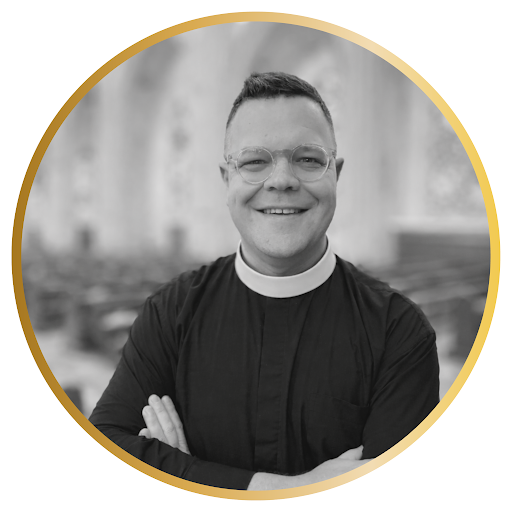
The Rev. Matthew D. O’Rear is pastor of St. Luke Lutheran Church in Atlanta. His ministry centers on deep welcome, honest faith, and a steady commitment to justice. He writes and teaches to help people notice God’s presence in ordinary life and to trust that grace still has power in a weary world. He lives in Atlanta with his husband, Jay.